
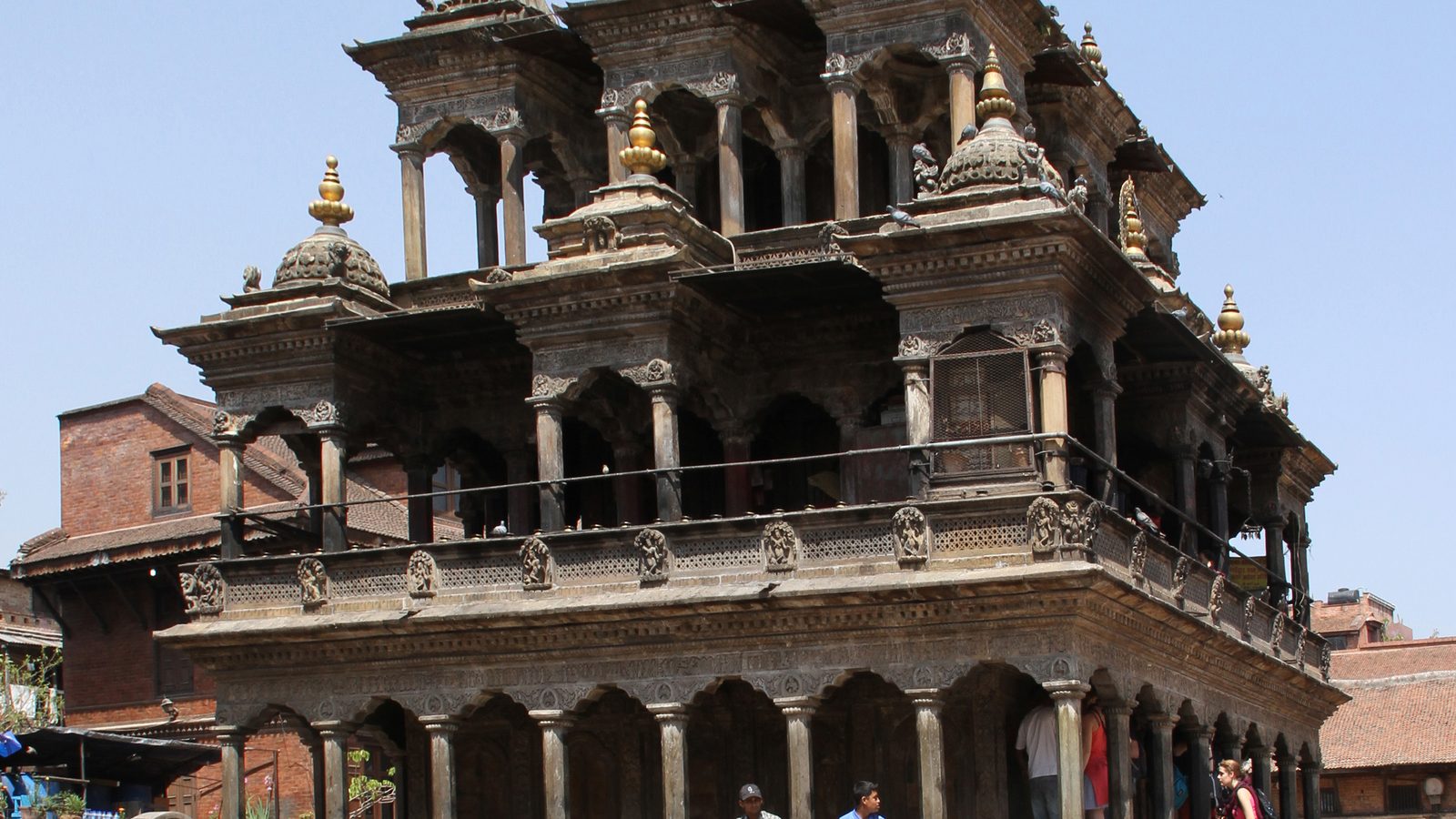
Photo: Gerd Eichmann, CC BY-SA 4.0, via Wikimedia Commons
Krishna Janmashtami is the birthday of Lord Krishna, the eighth avatar of Vishnu. It falls on Bhadra Krishna Ashtami, the eighth day of the dark fortnight of Bhadra. In 2083 BS it fell on Bhadra 19, Friday 4 September 2026. It is a public holiday in Nepal and is listed on the holidays calendar. Devotees fast and sing bhajans through the day, and the main puja is at midnight, when temples blow conches to mark the hour of Krishna's birth.
The story behind Krishna Janmashtami
Krishna was born at midnight in a prison cell in Mathura. King Kansa of Mathura had been told in a prophecy that the eighth child of his sister Devaki would kill him. He locked up Devaki and her husband Vasudeva and killed each of their children at birth. The eighth child was Krishna.
At the moment Krishna was born, the guards fell asleep and the chains opened. Vasudeva carried the baby across the flooded Yamuna river while the serpent Shesha shielded him from the rain. In Gokul, on the other side, he exchanged Krishna for a newborn girl. Krishna grew up as the son of a cowherd family and, as the prophecy said, later killed Kansa.
The festival follows this story. The day's fast is linked to the parents' imprisonment, the midnight puja marks the birth and escape, and most of the bhajans are about Krishna's childhood among the cowherds of Gokul.
How the Janmashtami fast works
People who keep the vrata eat no grain during the day. Most take fruit, milk, curd and water. Milk foods are common because of the stories of Krishna's love of milk and butter. The fast is broken only after the midnight birth puja.
Households with a Krishna shrine bathe the image of baby Krishna, dress it and rock it in a small cradle. The offerings are mostly milk and butter sweets, since many Janmashtami bhajans are about Krishna stealing butter. Temples hold kirtan through the evening, ending with the midnight arati.
Patan's Krishna Mandir: the main site of Krishna Janmashtami
In Nepal, the biggest Krishna Janmashtami gathering is at the stone Krishna Mandir in Patan Durbar Square. King Siddhinarasimha Malla built it in 1637. Most temples in the valley are brick and timber pagodas; this one is a shikhara-style tower of carved stone, with scenes from the Mahabharata and Ramayana carved along its galleries.
On Janmashtami the queue for the upper sanctum starts the evening before. By midday the line goes around the square, and the crowd stays until midnight. Women dressed in red and bhajan groups fill the colonnades, and the square is lit up for the night. The vigil goes ahead in any weather, and in Bhadra it often rains.
Krishna temples in Kathmandu, Bhaktapur and towns in the Terai hold their own night vigils. ISKCON centres, including the one at Budhanilkantha, hold large organised programmes with abhisheka (ritual bathing of the deity) and a midnight feast.
Janmashtami in the Bhadra festival season
Janmashtami falls about a week after Gai Jatra and about ten days before Teej. Families who observe all three have fasts and feasts through most of Bhadra.
Check the daily panchang during this month. It shows the ashtami and other tithis that decide these festival dates. Janmashtami is fixed to its tithi, so its AD date, and its BS date, change every year. To find the next date, see the festivals page or the countdown.
Practical tips
Visiting Patan: foreigners need a ticket to enter Patan Durbar Square. The sanctum queue is several hours long by afternoon. You do not need to queue to see the square, the bhajans and the lit temple, and the crowd is at its peak between 9 pm and midnight.
What to bring: an umbrella or raincoat, and be ready to stand for a long time.
Fasting at home: set up the cradle and prepare the milk sweets before evening so everything is ready for the midnight puja.
Holiday: government offices and banks are closed, and the lanes around Patan Durbar Square are crowded from evening.
Frequently Asked Questions
Why is Krishna Janmashtami celebrated at midnight?
Krishna is believed to have been born at midnight on Bhadra Krishna Ashtami. The main puja is held at that hour, and the fast is broken after it.
When is Krishna Janmashtami?
It falls on Bhadra Krishna Ashtami, usually in August or early September. In 2083 BS it was on Bhadra 19 (4 September 2026). The date changes every year because it follows the tithi.
Is Krishna Janmashtami a public holiday in Nepal?
Yes. Government offices and banks are closed. Check the holidays page for the current year's date.