
Photo: Lawwwson, CC BY-SA 4.0, via Wikimedia Commons
Gai Jatra, the cow procession, is held every year on the day after Janai Purnima, on Bhadra Krishna Pratipada. In Newar it is called Saa Paru. Families in the Kathmandu valley who lost a relative during the past year join a procession through town with a cow, or a child dressed as a cow, and the day is also known for open satire of politicians and public life. In 2026 Janai Purnima fell on 28 August, so Gai Jatra was on the following day. The date for the coming year is on the holidays calendar.
Because it follows a lunar tithi, the Gregorian date moves each year and can fall anywhere from early August to early September.
Why Gai Jatra has a cow and a procession
In the Newar tradition of the valley, every family that has had a death in the past year takes part in the procession. The traditional form is to lead a real cow through the town. The more common form today is a child from the family, usually a boy, dressed as a cow. He wears face paint, a headdress with a picture of a cow, and often carries a small printed photo of the person who died. The belief is that the cow guides the dead person across the Vaitarani river to the next world, and walking in the procession helps the soul reach it.
The procession also helps the living. Every family walking that day is in mourning, and they walk together in public while neighbours hand out fruit, beaten rice (chiura) and money. The grief of each household is shared by the whole neighbourhood for that day.
The Pratap Malla story
The satire comes from a legend. In the seventeenth century, the young son of King Pratap Malla died, and the queen could not recover from her grief. The king ordered every household that had lost someone that year to join the cow procession, so that the queen would see how many other families were mourning too. She watched but still did not smile. The king then invited people to mock, joke and imitate anyone they liked, without punishment. The queen finally laughed at the performances, and the freedom to make satire on this day became a permanent part of Gai Jatra.
Satire and comedy on Gai Jatra
Gai Jatra is still the day when people in power can be openly mocked. Costumes, skits, cross-dressing parades, special satire supplements in newspapers and stage shows make fun of politicians, officials and public life in general. During the Panchayat years, when the press was censored, Gai Jatra was one of the few accepted outlets for political mockery. Editors used the Gai Jatra issue to print what they could not publish the rest of the year. The comedy and the mourning are part of the same festival.
Since the early 2000s, Nepal's sexual and gender minority communities have also held a pride parade in Kathmandu on Gai Jatra. It fits the day's old custom of stepping outside everyday roles.
Where to see Gai Jatra
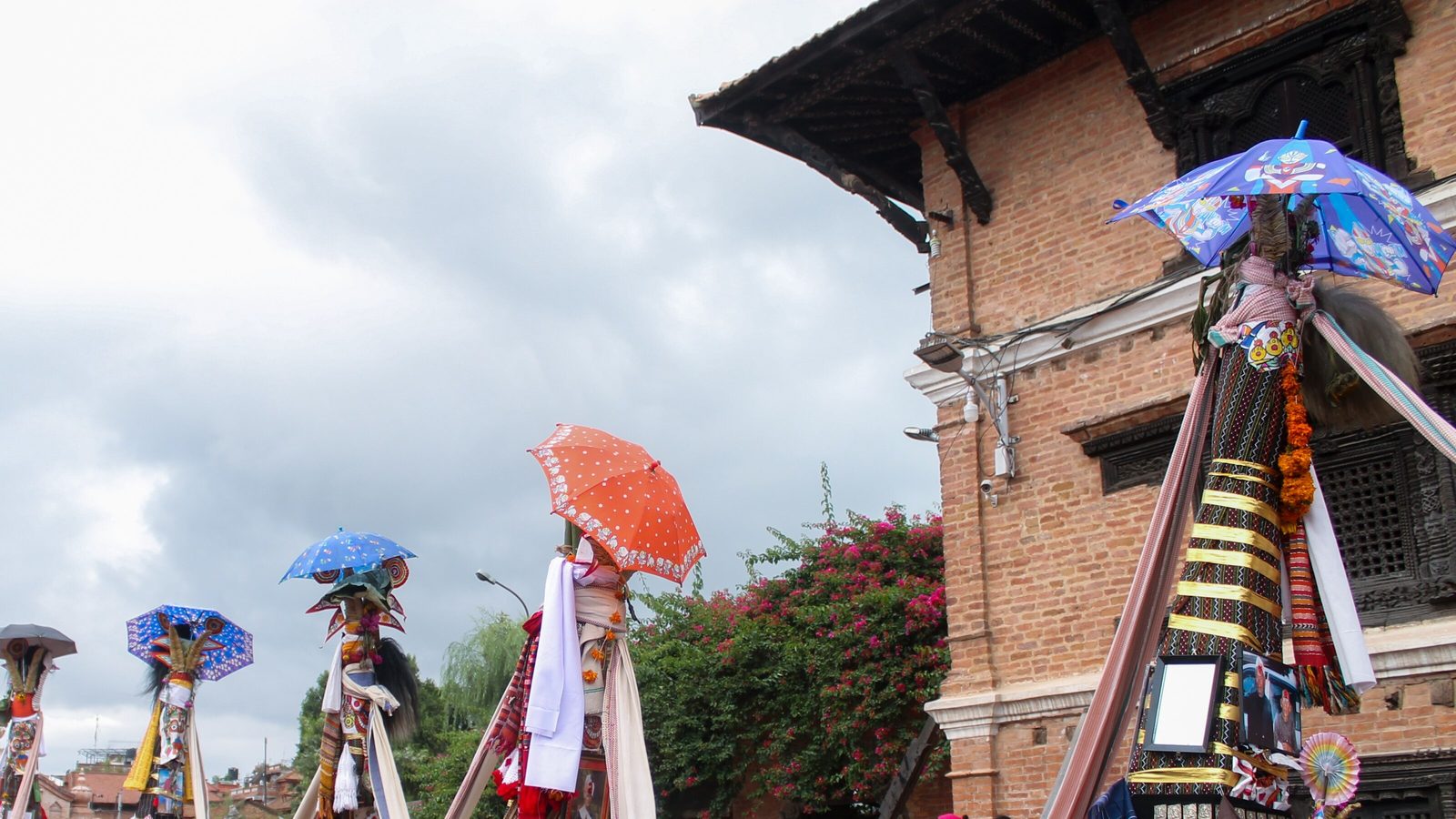
Bhaktapur has the biggest celebration in the valley. Processions carry tall bamboo frames called taha-macha, wrapped in cloth and topped with horns, one for each person who died that year. The streets fill with the ghinta ghisi stick dance, in which lines of dancers knock short sticks together in rhythm as they move through town. In Bhaktapur the jatra lasts for several days, not only one, and the taha-macha and dances are still on the streets the day after the main day.
Kathmandu, Patan and Bhaktapur have different procession routes and programmes. Ask local organisers about the current route and timing rather than assuming every old-town street is part of it. Leave room for participating families, avoid blocking narrow lanes and ask before photographing children or people mourning a relative.
Practical tips for Gai Jatra
- Go in the morning. Processions get thinner by early afternoon. For photos, the best light and the biggest crowds are usually between 8 and 11 am.
- Bhaktapur's entry fee for foreigners still applies on festival days, and the town is very crowded. Take the earliest bus you can.
- If a family in the procession offers you sagun or fruit, accept it. Refusing is considered rude.
- Many skits are local jokes, some centuries old and specific to one tole (neighbourhood), so you may not follow every one.
To remember the date: Gai Jatra is always the day after Janai Purnima. You can check the countdown on the countdown page or look up the tithi in today's Panchang.